In the field of water and wastewater management, understanding capacity and flow measurement is extremely important. Terms like KLD and MLD are commonly used in designing and operating treatment plants, but many people are not fully aware of their meaning. If you are involved in water treatment or planning a plant, knowing these terms can help you make better decisions.
In this detailed guide by Green Aqua Technologies, we will explain What are KLD and MLD in Water and Wastewater Treatment, along with their importance, applications, and how they are used in real-world systems.
Understanding KLD and MLD
Before going deeper, let’s understand the basic meaning of these terms.
- KLD full form is Kilo Liters per Day
- MLD full form in water is Million Liters per Day
These units are used to measure the capacity of water and wastewater treatment plants. In simple words, they tell us how much water can be treated in one day.
What is KLD in Water Treatment?
The term KLD full form in water refers to Kilo Liters per Day, where 1 KLD equals 1,000 liters of water per day. KLD is generally used for small-scale systems such as:
- Residential buildings
- Small commercial units
- Schools and institutions
- Small industries
For example, if a treatment plant is designed for 50 KLD, it means it can treat 50,000 liters of water daily.
KLD Full Form in STP
In the context of sewage treatment plants, the term KLD full form in STP is also Kilo Liters per Day. It is used to define the capacity of an STP (Sewage Treatment Plant).
For instance:
- A 100 KLD STP can treat 100,000 liters of sewage per day
- A 500 KLD STP is suitable for larger residential societies or small industrial setups
This measurement helps engineers design the plant according to wastewater generation.
What is MLD in Water Treatment?
The term MLD full form in water stands for Million Liters per Day. It is used for large-scale water and wastewater treatment systems.
- 1 MLD = 1,000,000 liters per day
- MLD is commonly used in:
- Municipal water treatment plants
- Large industrial facilities
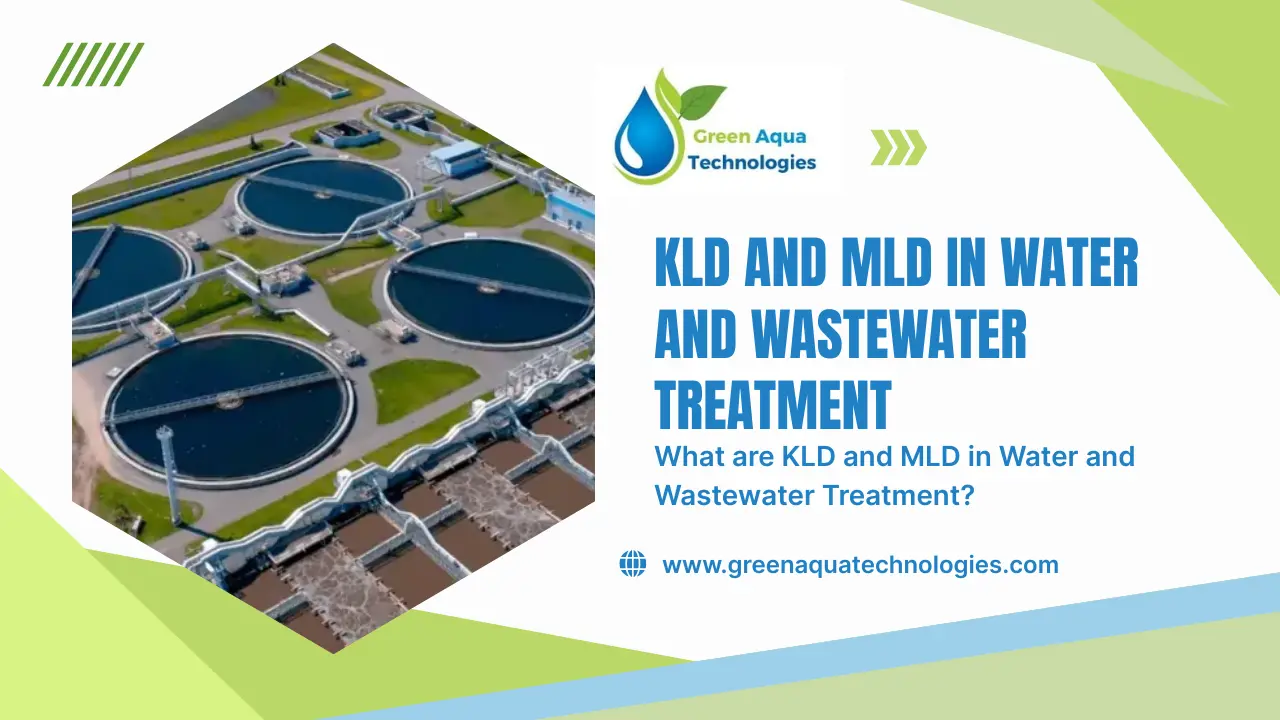
- City-level sewage treatment plants
For example, a 10 MLD plant can process 10 million liters of water daily, which is suitable for serving large populations.
Difference Between KLD and MLD
Although both units measure water flow capacity, they are used in different scenarios.
| Parameter | KLD | MLD |
|---|---|---|
| Full Form | Kilo Liters per Day | Million Liters per Day |
| Capacity | Small-scale | Large-scale |
| Usage | Buildings, small industries | Cities, large industries |
| Volume | 1,000 liters/day | 1,000,000 liters/day |
In simple terms, KLD is used for smaller systems, while MLD is used for large infrastructure projects.
Importance of KLD and MLD in Water Treatment
Understanding these units is crucial for proper planning and operation of treatment systems.
- Accurate Plant Design- Engineers use KLD and MLD values to design treatment plants based on water consumption and wastewater generation.
- Efficient Resource Management- Knowing the exact capacity helps in managing water resources effectively and avoiding wastage.
- Cost Optimization- Selecting the right plant size prevents over-investment or under-capacity issues.
- Regulatory Compliance- Government authorities often specify treatment capacity in KLD or MLD, making it important for approvals and compliance.
How to Calculate KLD and MLD?
The calculation depends on water consumption or wastewater generation.
For KLD:
If a building uses 200 liters per person per day and has 100 people:
200 × 100 = 20,000 liters/day = 20 KLD
For MLD:
If a city generates 5,000,000 liters of wastewater per day:
5,000,000 ÷ 1,000,000 = 5 MLD
These calculations help in selecting the right treatment system.
Applications in Water and Wastewater Treatment
KLD and MLD measurements are widely used in:
- Sewage Treatment Plants (STP)- STPs are designed based on daily sewage generation, usually measured in KLD or MLD.
- Effluent Treatment Plants (ETP)- Industries use ETPs to treat wastewater, and their capacity is defined using these units.
- Water Treatment Plants (WTP)- Municipalities and industries use WTPs to purify water for reuse or supply.
- Industrial Applications- Different industries calculate their water usage and wastewater discharge in KLD or MLD to ensure proper treatment.
Role of Green Aqua Technologies
At Green Aqua Technologies, we specialize in designing and supplying advanced water and wastewater treatment systems. Whether your requirement is in KLD or MLD capacity, we provide customized solutions to meet your specific needs.
Our expertise includes:
- Sewage Treatment Plants (STP)
- Effluent Treatment Plants (ETP)
- Water Treatment Systems
- Turnkey project solutions
We focus on delivering efficient, cost-effective, and environmentally friendly systems for all types of clients.
Choosing the Right Capacity for Your Plant
Selecting the correct capacity is very important for smooth operation. Here are some tips:
- Analyze daily water usage
- Consider future expansion
- Check industry standards
- Consult experts for accurate estimation
A well-planned system ensures better performance and long-term savings.
Common Mistakes to Avoid
While planning a treatment system, avoid these mistakes:
- Underestimating water consumption
- Ignoring peak load conditions
- Choosing incorrect plant size
- Lack of proper maintenance planning
These errors can lead to inefficiency and higher operational costs.
Future of Water Treatment Systems
With increasing population and industrial growth, the demand for efficient water treatment systems is rising. Technologies are evolving to handle larger capacities, and understanding units like KLD and MLD will continue to play a key role in system design and management.
Conclusion
Understanding What are KLD and MLD in Water and Wastewater Treatment is essential for anyone involved in water management. These units help define the capacity of treatment systems and ensure proper planning, design, and operation. While kld full form (Kilo Liters per Day) is used for smaller systems, mld full form in water (Million Liters per Day) is suitable for large-scale applications. Knowing the kld full form in water and kld full form in stp helps in designing efficient treatment plants and managing resources effectively.
If you are planning a water or wastewater treatment project, Green Aqua Technologies can help you choose the right solution based on your capacity requirements.