Wastewater treatment involves multiple processes to remove suspended solids, organic matter, and impurities from wastewater before it can be reused or safely discharged. One of the most important units used in this process is a Clariflocculator. It combines the functions of a flocculator and a clarifier in a single integrated tank, making the wastewater treatment process more efficient and space-saving.
Clariflocculator process is widely used in Sewage Treatment Plants (STP), Effluent Treatment Plants (ETP), and industrial water treatment systems to separate suspended particles from treated water through chemical flocculation and sedimentation. Green Aqua Technologies provides advanced wastewater treatment solutions, including efficient clariflocculation systems designed for reliable and effective water purification.
What is a Clariflocculator?
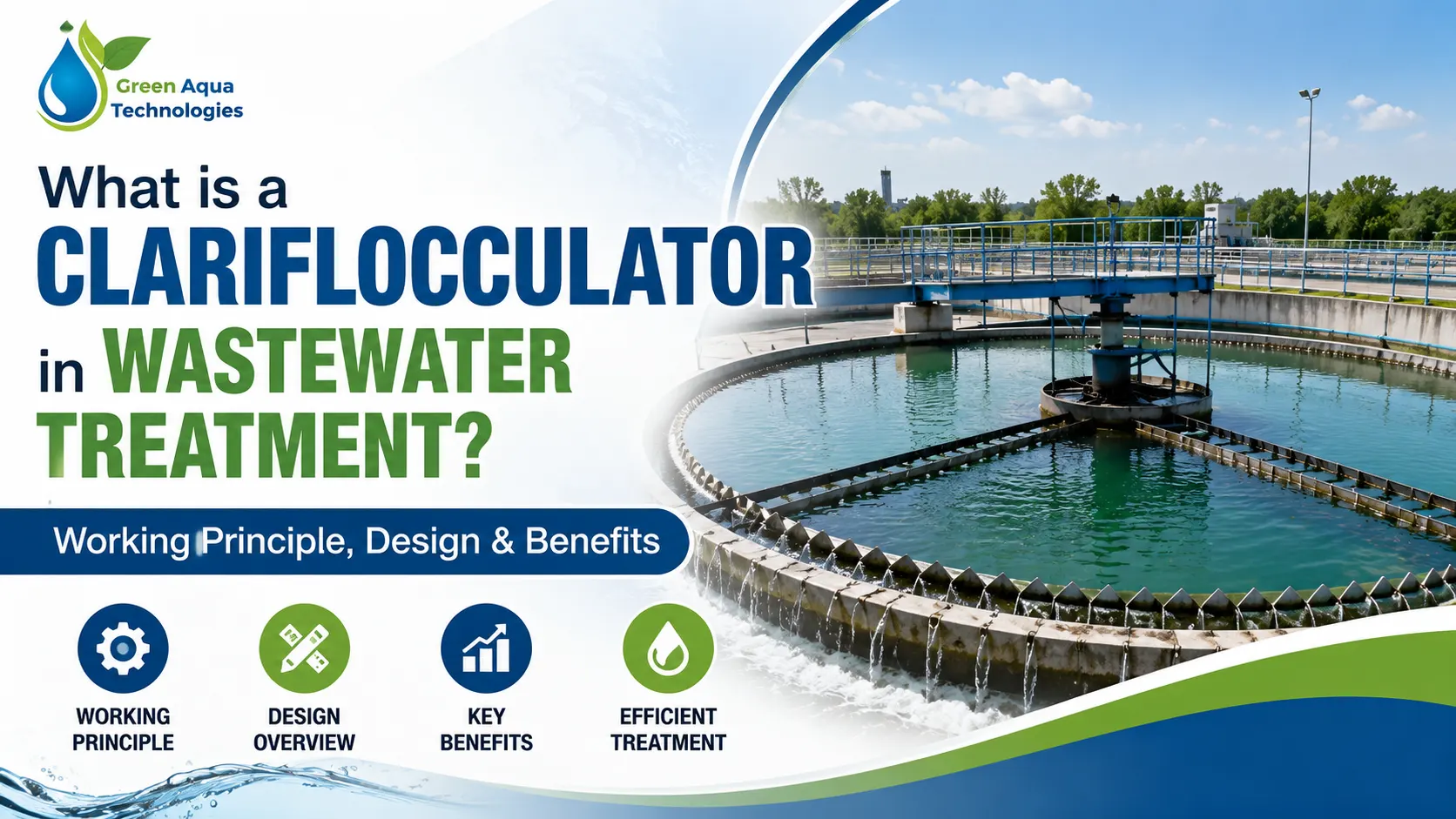
A Clariflocculator is a circular treatment unit that combines flocculation and clarification processes in one tank. It is designed to remove suspended solids, colloidal particles, and other impurities from wastewater.
In a conventional treatment process, flocculation and clarification are carried out in separate tanks. However, a clariflocculator integrates both processes, reducing space requirements and improving operational efficiency.
The unit consists of two main zones:
- Flocculation Zone: Where chemicals are added and mixed slowly to form larger flocs.
- Clarification Zone: Where these formed flocs settle at the bottom, allowing clear water to flow out.
Clariflocculator in Water Treatment Plant
Clariflocculator in a Water Treatment Plant is an integrated unit that combines the processes of flocculation and clarification in a single tank. It helps remove suspended solids, impurities, and unwanted particles from raw water by using chemical coagulation and sedimentation methods. In the flocculation zone, particles combine to form larger flocs, which then settle at the bottom in the clarification zone. The treated clear water is collected for further filtration or use.
Working Principle of Clariflocculator
The working principle of a clariflocculator is based on coagulation, flocculation, and sedimentation.
1. Coagulation Process
During wastewater treatment, chemicals such as alum, ferric chloride, or other coagulants may be added to neutralize the charges of suspended particles. This helps smaller particles combine together.
2. Flocculation Process
After coagulation, the wastewater enters the flocculation zone where slow mechanical mixing encourages particles to collide and form larger groups called flocs.
The gentle mixing ensures proper floc formation without breaking the particles.
3. Sedimentation Process
The wastewater then moves into the clarification zone. Due to gravity, the heavier flocs settle at the bottom of the tank as sludge.
The clarified water rises to the surface and is collected through overflow channels for further treatment or discharge.
Main Components of Clariflocculator
A properly designed clariflocculator consists of various components that ensure smooth operation:
1. Central Drive Mechanism
The central drive system operates the rotating arms used for sludge collection and mixing.
2. Flocculation Chamber
This area provides controlled mixing to promote the formation of larger flocs.
3. Clarification Zone
The clarification zone allows suspended solids to settle and separates sludge from treated water.
4. Scraper Mechanism
The scraper collects settled sludge from the bottom of the tank and directs it toward the sludge collection pit.
5. Overflow Launder
The overflow system collects clarified water and transfers it to the next treatment stage.
Design Considerations of Clariflocculator
The design of a clariflocculator depends on several factors, including:
- Wastewater flow rate
- Quality of incoming wastewater
- Required treatment efficiency
- Hydraulic retention time
- Sludge production rate
- Tank diameter and depth
- Type of chemical treatment used
Applications of Clariflocculator
Clariflocculators are commonly installed in various water and wastewater treatment facilities, such as:
Sewage Treatment Plants (STP)
In STP plants, clariflocculators help remove suspended solids and improve the quality of treated sewage before final discharge or reuse.
Effluent Treatment Plants (ETP)
Industries use clariflocculators to treat wastewater containing chemicals, oils, and suspended impurities.
Industrial Water Treatment
They are also used for pre-treatment of water before advanced processes like filtration, RO, and recycling systems.
Maintenance of Clariflocculator
Regular maintenance is important to ensure long-term performance. Key maintenance activities include:
- Checking mechanical drive systems
- Inspecting scraper arms
- Monitoring sludge removal efficiency
- Cleaning overflow channels
- Checking chemical dosing systems
- Lubricating moving components
Green Aqua Technologies for Clariflocculator Systems?
Green Aqua Technologies specializes in designing and providing advanced wastewater treatment solutions for residential, commercial, and industrial applications. The company focuses on delivering efficient, durable, and customized wastewater treatment systems according to project requirements.
With expertise in STP water treatment plants, and wastewater management solutions, Green Aqua Technologies ensures reliable performance, energy efficiency, and compliance with environmental standards.
Conclusion
A Clariflocculator plays a crucial role in wastewater treatment by combining flocculation and clarification in one efficient unit. It helps remove suspended solids, improves water quality, and reduces space and operational requirements.
For industries and municipalities looking for effective wastewater treatment solutions, selecting a reliable technology provider like Green Aqua Technologies can help achieve efficient and sustainable water management.