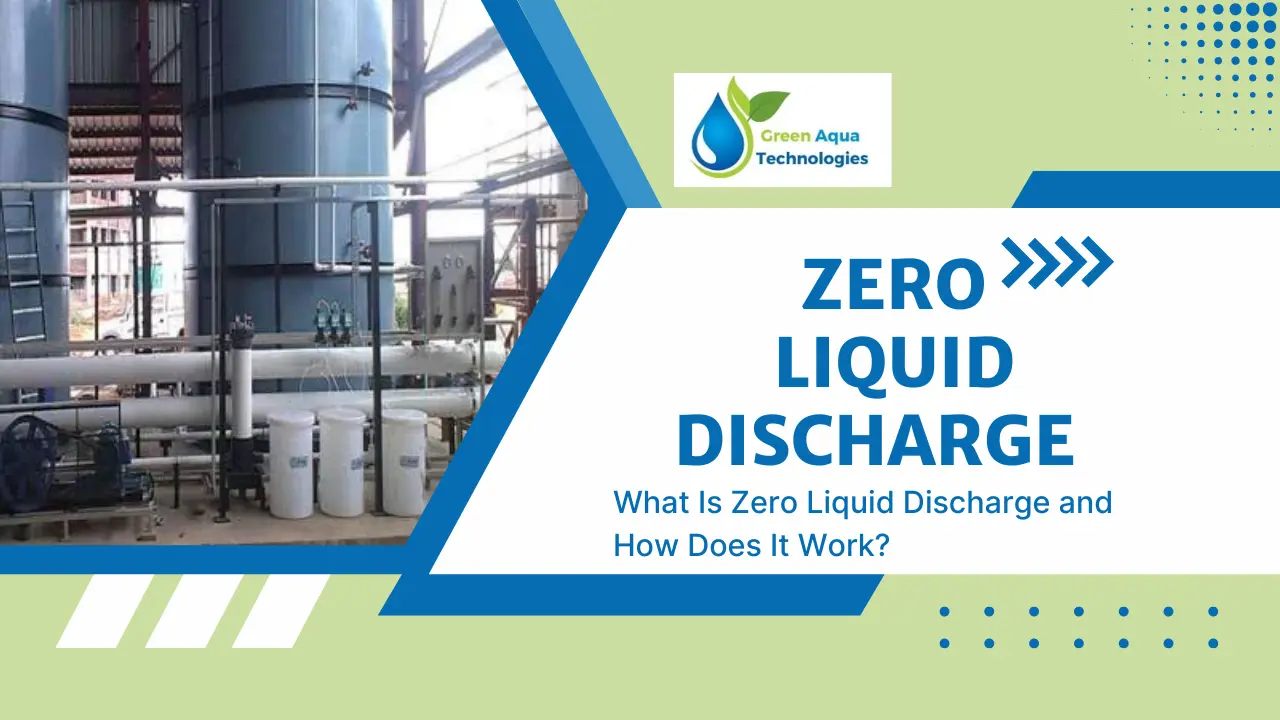
Water scarcity and strict environmental regulations have made wastewater management a major challenge for industries today. Many industrial processes generate large volumes of wastewater that cannot be discharged directly into the environment. To solve this problem, industries are now adopting Zero Liquid Discharge (ZLD) systems. ZLD is an advanced water treatment approach that ensures no liquid waste leaves the industrial facility.
Green Aqua Technologies provides efficient and customized ZLD solutions that help industries recover water, reduce pollution, and comply with environmental norms. In this blog, we will explain what Zero Liquid Discharge is, what the ZLD plant is, and how the ZLD process works in a simple and easy-to-understand way.
What Is Zero Liquid Discharge (ZLD)?
Zero Liquid Discharge is a water treatment process in which all wastewater generated by an industry is treated, recycled, and reused within the plant. As the name suggests, there is zero discharge of liquid waste into the environment.
In a ZLD system, wastewater is treated in multiple stages. Clean water is recovered and reused in industrial processes, while the remaining waste is converted into solid form for safe disposal. This makes ZLD one of the most effective solutions for sustainable water management.
What Is ZLD Plant?
To understand the concept clearly, it is important to know what is ZLD plant. A ZLD plant is a complete wastewater treatment system designed to achieve zero liquid discharge. It combines different treatment technologies such as filtration, membrane processes, evaporation, and crystallization.
A ZLD plant is commonly used in industries like textiles, pharmaceuticals, chemicals, power plants, food processing, and distilleries, where wastewater discharge is either restricted or not allowed.
Why ZLD Is Important for Industries?
Industries consume large quantities of water every day. With decreasing freshwater availability and strict pollution control regulations, ZLD has become a necessity rather than an option.
ZLD helps industries reduce their dependence on fresh water sources, minimize environmental impact, and meet legal requirements. By adopting ZLD water treatment, industries can turn wastewater into a valuable resource instead of a waste product.
What Is ZLD Process?
Many people ask, what is ZLD process and how it achieves zero discharge. The ZLD process is a combination of physical, chemical, and thermal treatment steps designed to recover maximum water from wastewater.
The ZLD process treats wastewater in stages, where each stage removes specific impurities. The final result is reusable water and solid waste, ensuring no liquid effluent is released outside the plant.
ZLD Plant Process Explained
The ZLD plant process starts with collecting wastewater from different industrial operations. This wastewater is first treated to remove suspended solids, oil, and grease. After this, advanced treatment steps are applied to remove dissolved salts and contaminants.
Clean water recovered during the process is reused in the plant, while the concentrated waste stream is further treated to convert it into solid form. This systematic approach makes the ZLD system highly effective and reliable.
ZLD Plant Process Flow Diagram (Step-by-Step Explanation)
Although a ZLD plant process flow diagram is usually shown visually, the process can be understood through the following stages explained in words.
- Pre-Treatment Stage- In this stage, large particles, suspended solids, and oil are removed using screens, clarifiers, and filters. This step protects the advanced treatment units from damage.
- Primary and Secondary Treatment- Chemical treatment and biological treatment are used to reduce organic load, color, and other pollutants. This prepares the water for membrane-based treatment.
- Membrane Treatment- Processes like Reverse Osmosis (RO) are used to separate clean water from dissolved salts. The permeate water is reused, while the reject water moves to the next stage.
- Evaporation and Crystallization- The concentrated reject water is treated in evaporators and crystallizers. Water is evaporated and recovered, while salts are converted into solid crystals. This entire sequence represents the ZLD plant process flow diagram in practical terms.
ZLD Water Treatment and Water Recovery
ZLD water treatment focuses on maximum water recovery. In most cases, more than 90–95% of wastewater can be recovered and reused. This significantly reduces freshwater intake and operating costs over time.
Recovered water can be used for cooling towers, boilers, washing processes, and other industrial applications. This makes ZLD systems both environmentally and economically beneficial.
ZLD Plant Cost Factors
One of the most common questions industries ask is about ZLD plant cost. The cost of a ZLD plant depends on several factors such as wastewater quantity, quality, type of industry, and required recovery rate.
Other factors affecting ZLD plant cost include the selection of treatment technologies, level of automation, energy consumption, and maintenance requirements. Although the initial investment is higher compared to conventional treatment systems, the long-term benefits often justify the cost.
Industries That Require ZLD Plants
ZLD systems are widely used in industries where wastewater discharge is strictly regulated. Textile dyeing units, chemical plants, pharmaceutical industries, power plants, and food processing units are some common examples. In many regions, pollution control boards mandate ZLD systems for certain industries. This has increased the demand for reliable ZLD plant manufacturers and solution providers.
Benefits of ZLD System
A ZLD system offers multiple benefits for industries aiming for sustainable operations.
- Complete elimination of liquid wastewater discharge
- Maximum reuse of treated water
- Reduced dependence on freshwater sources
- Compliance with environmental regulations
- Improved corporate environmental responsibility
By implementing the right ZLD process, industries can achieve long-term operational efficiency.
Challenges in ZLD Implementation
While ZLD systems offer many advantages, they also come with challenges. High energy consumption, skilled operation, and proper maintenance are important factors to consider. Choosing an experienced solution provider like Green Aqua Technologies helps overcome these challenges through optimized design, energy-efficient systems, and reliable after-sales support.
Role of Green Aqua Technologies in ZLD Solutions
Green Aqua Technologies specializes in designing and supplying advanced ZLD (Zero Liquid Discharge) plants tailored to specific industrial needs. From process design to installation and commissioning, the company provides end-to-end ZLD solutions. With strong technical expertise and a focus on quality, Green Aqua Technologies helps industries implement effective ZLD water treatment systems that meet regulatory standards and operational objectives.
Future of Zero Liquid Discharge
As water scarcity increases and environmental norms become stricter, the importance of ZLD will continue to grow. Industries adopting ZLD today are better prepared for future challenges related to water management and sustainability.
ZLD is not just a treatment process; it is a long-term strategy for responsible industrial growth.
Conclusion
Zero Liquid Discharge (ZLD) is an excellent approach for industrial wastewater management. By understanding what a ZLD plant is, what the ZLD process entails, and the entire ZLD plant process, industries can make informed decisions to conserve water. Although the initial cost of a ZLD plant may seem high, the benefits of water recovery, regulatory compliance, and environmental protection make it a worthwhile investment. With proper design and execution, ZLD systems help industries effectively achieve zero liquid discharge.
If you are looking for reliable and efficient ZLD solutions, Green Aqua Technologies is your trusted partner for advanced wastewater treatment systems.
Pingback: Sewage Treatment Plant (STP): Definition, Process, Advantages & Disadvantages