In today’s rapidly urbanizing world, effective wastewater management has become a critical necessity. With increasing population, industrial growth, and water scarcity, treating sewage before releasing it back into the environment is no longer optional—it is essential. This is where a Sewage Treatment Plant (STP) plays a vital role. At Green Aqua Technologies, we specialize in designing and supplying advanced STP plants that ensure sustainable water management and environmental protection.
This blog explains the STP full form, its meaning in water treatment, working process, benefits, and limitations in a simple yet informative manner.
What Is STP? (STP Full Form Water)
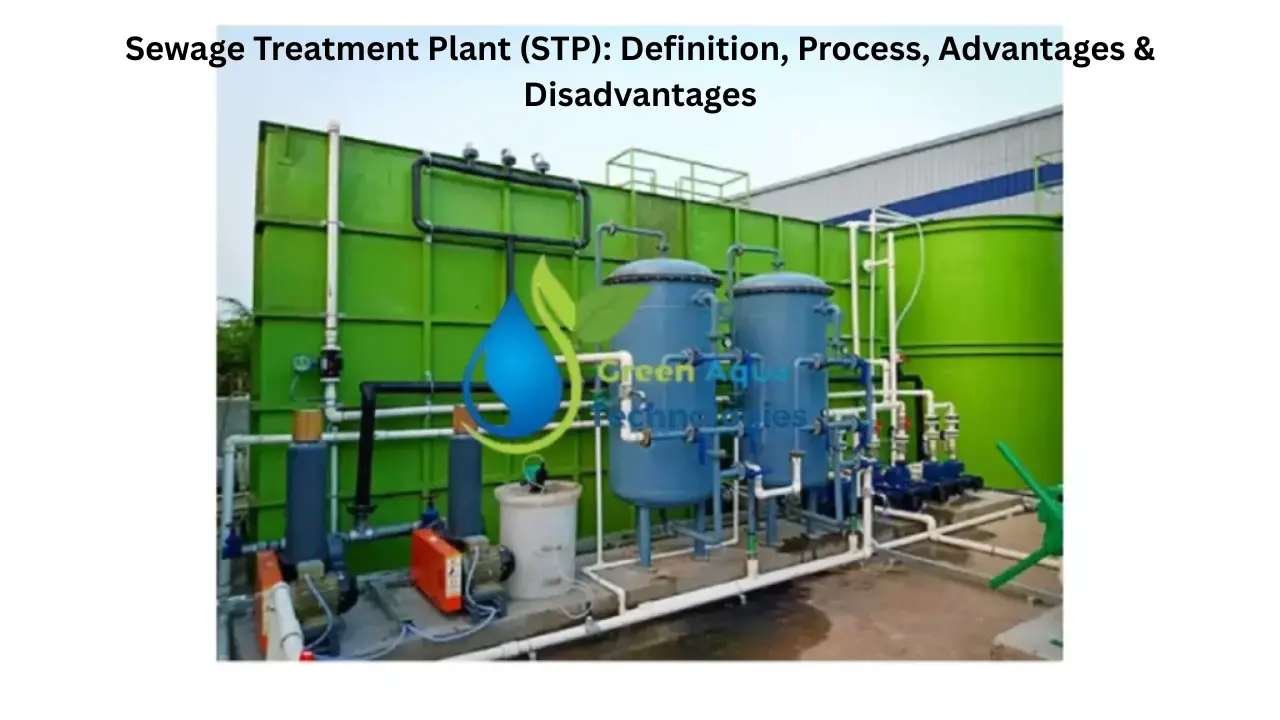
The STP full form is Sewage Treatment Plant. In simple terms, an STP is a system designed to treat domestic and industrial wastewater, remove contaminants, and make the water safe for reuse or discharge into natural water bodies. Many people often ask about the STP water full form, which again stands for Sewage Treatment Plant in water and wastewater treatment systems. The main objective of an STP plant is to reduce pollution, protect ecosystems, and promote water reuse.
Also Read: What Is Zero Liquid Discharge and How Does It Work?
Importance of Sewage Treatment Plant
Untreated sewage contains harmful bacteria, chemicals, organic waste, and suspended solids. If released directly into rivers or groundwater, it can cause severe environmental damage and health hazards. A properly designed STP plant helps in:
- Preventing water pollution
- Conserving freshwater resources
- Meeting environmental compliance norms
- Supporting sustainable urban infrastructure
With water scarcity becoming a serious concern, treated sewage water is increasingly reused for gardening, flushing, cooling towers, and industrial processes.
STP Plant: How Does It Work?
The working of a Sewage Treatment Plant involves multiple stages to remove physical, biological, and chemical impurities. Below is a detailed explanation of the STP process.
1. Preliminary Treatment
This is the first stage of the STP plant where large solids are removed. Key processes include:
- Screening to remove plastics, rags, and debris
- Grit removal to eliminate sand and heavy particles
This step protects downstream equipment from damage and clogging.
2. Primary Treatment
In this stage, wastewater flows into a primary settling tank where heavier solids settle at the bottom as sludge, and lighter materials float to the surface.
Outcome:
- Removal of 50–60% suspended solids
- Reduction in organic load
Primary treatment improves the efficiency of secondary treatment.
3. Secondary Treatment (Biological Treatment)
This is the heart of the STP plant, where organic pollutants are biologically degraded using microorganisms.
Common biological processes include:
- Activated Sludge Process (ASP)
- Moving Bed Biofilm Reactor (MBBR)
- Sequential Batch Reactor (SBR)
Microorganisms consume organic matter, significantly reducing BOD (Biochemical Oxygen Demand) and COD (Chemical Oxygen Demand).
4. Secondary Clarification
After biological treatment, wastewater enters a secondary clarifier where activated sludge settles down.
- Clear water moves to the next stage
- Settled sludge is partly recycled and partly sent for sludge treatment
5. Tertiary Treatment (Advanced Treatment)
Tertiary treatment enhances water quality further and prepares it for reuse. Processes may include:
- Pressure sand filtration
- Activated carbon filtration
- Chlorination or UV disinfection
This stage ensures treated water meets discharge or reuse standards.
6. Sludge Treatment and Disposal
Sludge collected from the STP is treated through thickening, digestion, and dewatering. The treated sludge can be disposed of safely or used as manure after proper stabilization.
Types of Sewage Treatment Plants
Depending on application, capacity, and wastewater characteristics, different STP technologies are used:
- MBBR STP Plant
- SBR STP Plant
- ASP STP Plant
- Packaged STP Plants
- Membrane Bioreactor (MBR) Systems
At Green Aqua Technologies, we provide customized STP solutions suitable for residential societies, hotels, hospitals, industries, and commercial complexes.
Advantages of Sewage Treatment Plant
Installing an STP plant offers numerous environmental, economic, and operational benefits.
Water Reuse and Conservation- Treated water can be reused for gardening, flushing, cooling, and industrial purposes, reducing freshwater demand.
- Environmental Protection- STP plants prevent untreated sewage from polluting rivers, lakes, and groundwater.
- Regulatory Compliance- Helps industries and institutions comply with pollution control board norms.
- Cost Savings- Reusing treated wastewater lowers water procurement and sewage disposal costs.
- Improved Public Health- By removing harmful pathogens, STPs reduce the risk of waterborne diseases.
Disadvantages of Sewage Treatment Plant
While STP plants are highly beneficial, they also have some limitations.
- High Initial Investment- The setup cost of an STP plant can be significant, especially for advanced technologies.
- Operational Expertise Required- Proper operation and maintenance require skilled manpower.
- Energy Consumption- Certain STP processes consume electricity for aeration and pumping.
- Sludge Management- Disposal of treated sludge needs careful handling and compliance.
Despite these challenges, the long-term environmental and economic benefits far outweigh the disadvantages.
Applications of STP Plants
Sewage Treatment Plants are widely used in:
- Residential apartments and townships
- Hotels and resorts
- Hospitals and healthcare facilities
- Educational institutions
- Industrial units
- Commercial complexes
With rising awareness of water sustainability, STP installation has become mandatory in many regions.
Why Choose Green Aqua Technologies?
Green Aqua Technologies is committed to providing cost-effective STP plant solutions tailored to your needs. We offer a wide range of STP plants, ETP plants, WTP plants, and wastewater treatment plants. We specialize in providing plants according to our customers’ requirements: We specialize in the following areas: Advanced STP Technology, Energy-efficient design, Compliance with CPCB and SPCB regulations, Complete turnkey solutions, Reliable after-sales support. We focus on delivering long-lasting, environmentally friendly, and economical sewage treatment systems.
Conclusion
Understanding the STP full form water, its working process, advantages, and limitations is essential for sustainable water management. A well-designed Sewage Treatment Plant not only protects the environment but also promotes water reuse and cost savings. As water scarcity and environmental regulations continue to increase, investing in an efficient STP plant is a smart and responsible decision. With the right technology and expert support from Green Aqua Technologies, you can ensure clean water, regulatory compliance, and a greener future.