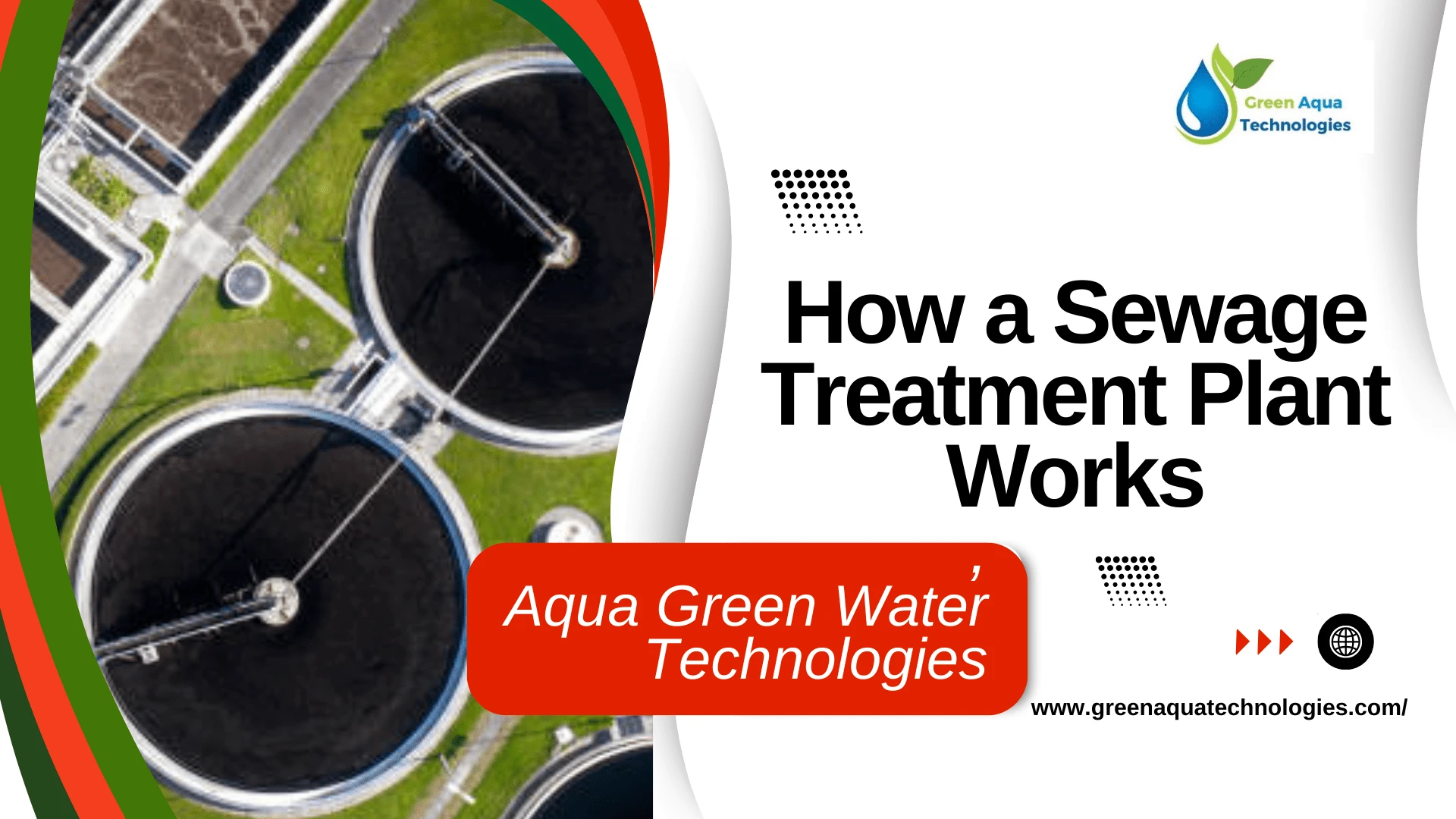
How a Sewage Treatment Plant Works (with Diagram): Simple Guide by Green Aqua Technologies
Sewage treatment is fundamental to ensure that dirty water from homes and businesses does not pollute our surroundings or harm people and animals. at green aqua technologies, were committed to building reliable, eco friendly sewage treatment plants for communities and industries. Below is a detailed explanation of how an stp works using simple words, step by step so anyone can understand the process.
What is Sewage?
Sewage is used water from homes, offices, factories, and public places. It contains body waste (from toilets), leftover food, detergents, soap, chemicals and dirt from kitchens, bathrooms and washing areas. If released untreated, it can cause diseases and contaminate rivers, lakes and Groundwater.
Why Do We Need Sewage Treatment Plants?
- Protects water bodies from pollution
- Prevents health problems caused by bacteria/viruses
- Protects aquatic life
- Supports water recycling for gardening, cleaning, and industry
- Meets government regulations
At Green Aqua Technologies, our mission is to help society and nature by offering affordable and efficient sewage treatment solutions.
Overview: Main Stages of Sewage Treatment Plant at Green Aqua Technologies
- Collection of Sewage
- Preliminary Treatment (Screening and Grit Removal)
- Primary Treatment (Sedimentation/Clarifiers)
- Secondary Treatment (Biological/Aeration)
- Tertiary Treatment (Advanced Treatment/Disinfection)
- Sludge Treatment and Disposal
- Effluent Discharge or Reuse
Sewage Treatment Flow Diagram Explanation
Imagine the process as a simple flow from dirty water coming in, to clean water going out. Here’s a verbal diagram:
INFLUENT (Dirty Water) → SCREENING → GRIT REMOVAL → PRIMARY SEDIMENTATION → AERATION TANK (BIOLOGICAL) → SECONDARY CLARIFIER → TERTIARY TREATMENT (FILTER/UV) → EFFLUENT (Cleaned Water)
SLUDGE from sedimentation & clarifier → SLUDGE TREATMENT → SAFE DISPOSAL
1. Collection of Sewage
Sewage is collected through underground pipes from homes, offices, industries, and public places. These pipes bring the wastewater to the STP inlet chamber. Pumps may be used if the area is lower than the plant level.
at Green Aqua Technologies, we design collection systems that are leakage-proof and low-maintenance, to ensure efficient wastewater transport.
2. Preliminary Treatment: Screening and Grit Removal
Screening: The first barrier is the screen chamber, which acts like a net to trap large objects cloth, plastics, rags, sticks or sanitary items—that could damage machinery down the line. these are collected and sent for safe Disposal.
Grit Removal: Next, the water flows to a grit chamber, a wide channel where heavy particles (like sand and small stones) settle down due to slow water movement. Grit is removed regularly.
Green Aqua Technologies uses automated screens and easy-to-clean grit chambers to reduce manpower and maintenance.
3. Primary Treatment: Sedimentation Tanks
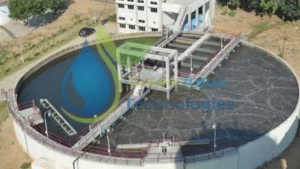
sedimentation (clarifiers): The water enters a large tank where flow slows down. heavy suspended solids settle at the bottom forming primary sludge, while oil and grease float up and are skimmed off.
the clear water at the top (primary effluent) moves to the next stage, while the sludge is collected for later treatment.
Our clarifiers are designed for optimal separation, with strong scraper arms and efficient surface skimmers.
4. Secondary Treatment: Biological (Aeration Process)
Secondary treatment is the heart of an STP, using natural biological processes. The goal is to remove dissolved organic substances that remain after primary treatment.
Aeration Tank:
In the aeration tank, air is pumped in using blowers. Tiny bubbles increase oxygen, helping bacteria thrive.
bacteria and other microbes break down the waste, feeding on the organic material.
This mixture of treated water and bacteria is called mixed liquor.
Secondary Clarifiers:
after biological cleaning, the water flows to another sedimentation tank (secondary clarifier).
Here, bacteria (now called ‘activated sludge’) settle at the bottom.
Clear water at the top (secondary effluent) is now almost free of organic pollutants.
Some sludge is recycled back to the aeration tank (to keep bacteria levels high), and the rest goes for sludge treatment.
Green Aqua Technologies uses advanced diffused aeration and efficient sludge recycling to ensure complete cleaning
5. Tertiary Treatment: Advanced Cleaning and Disinfection
For higher purity, the water may undergo tertiary treatment:
Filtration: Through sand, carbon, or membrane filters to remove fine particles and color
Disinfection: Chlorine, ozone, or UV light is used to kill any remaining germs or pathogens
now, the water is fit for irrigation, flushing, cooling, or safe discharge to rivers.
many STPs by Green Aqua Technologies offer automated disinfection units for safety and compliance
6. Sludge Treatment
All sludge (settled solids) contains many nutrients but also pathogens and toxic materials. It goes through:
- Thickening: Concentrating sludge to reduce water content
- Digestion: Anaerobic bacteria break down organic matter, reducing smell and volume
- Dewatering: mechanical equipment (like filter presses or centrifuges) makes sludge dry
- Disposal or Reuse: dry sludge can sometimes be used as fertilizer if safe, or sent to landfill
our plants offer complete sludge management including energy-efficient digestion and drying
7. Clean Effluent Discharge or Water Reuse
The final clean water (effluent) is either:
released to rivers, drains, or other bodies as per environmental norms
reused for gardening, washing, toilet flushing, or industry
green aqua technologies encourages water recycling and reuse systems for sustainability.
Detailed Written “Diagram” Example
Imagine the sewage treatment plant as a series of connected tanks, each with its own job:
- Inlet Chamber: Receives dirty water
- Screen Chamber: Catches big, unwanted objects
- Grit Chamber: Removes sand and stones
- Primary Clarifier: Heavy waste settles, oil is skimmed
- Aeration Tank: Air bubbles feed bacteria that clean the water
- Secondary Clarifier: More sludge settles, cleaner water at top
- Tertiary Treatment Unit: Advanced filter and germ-killing
- Outlet: Clean water goes out to the environment or storage
- Sludge Processing Area: Handles the waste solids for safe disposal or use
Key Benefits of Sewage Treatment Plants by Green Aqua Technologies
- Clean, eco-friendly treated water
- Compact, low-maintenance designs
- Reduced operational costs with energy-saving features
- Automated control systems for safety and efficiency
- Full compliance with local and national regulations
Frequently Asked Questions
What is STP capacity?
The size of STP depends on the amount of sewage produced—which relates to the number of people or the activity in the area (e.g., a colony, hotel, or industry).
How long does the treatment take?
From inlet to final discharge, wastewater may take several hours up to a day to pass through all stages.
Is the treated water safe?
Water treated by a modern STP is free from harmful substances, pathogens, and bad smell. It can be used for gardens, toilets, and industry, and is safe to release as per law.
What are the running costs?
Running costs depend on the plant size, automation level, energy-saving features, and frequency of maintenance—but Green Aqua Technologies offers solutions designed for low operating costs over long periods.
Why Choose Green Aqua Technologies?
- Years of experience in STP design and manufacturing
- Customized solutions for all property types
- Expert team, fast installation, reliable after-sales service
- Focus on affordable, long-lasting, and sustainable systems
Conclusion
A sewage treatment plant cleans wastewater through several scientific yet simple steps, ensuring public safety and environmental health. From the first screen to the final treated water, every stage at Green Aqua Technologies is built for reliability, efficiency, and ease of use.
If looking for a trustworthy company to design, install, or upgrade your sewage treatment plant, Green Aqua Technologies provides expert support and sustainable solutions for every need.
For more information, site visits, or a free consultation, contact Green Aqua Technologies—your partner in cleaner water, greener future!
SEO-Friendly Keywords for STP Content
Green Aqua Technologies, sewage treatment plant, STP process, wastewater management, how STP works, sewage treatment diagram, sewage treatment plant working, industrial sewage treatment, eco-friendly sewage solutions, recycled water, effluent treatment, sludge management, environmental compliance